The History of Boxing Trading Cards (1880s–Present)
From tobacco inserts to global collectibles
Origins: The 1880s – The Birth of the Boxing Card
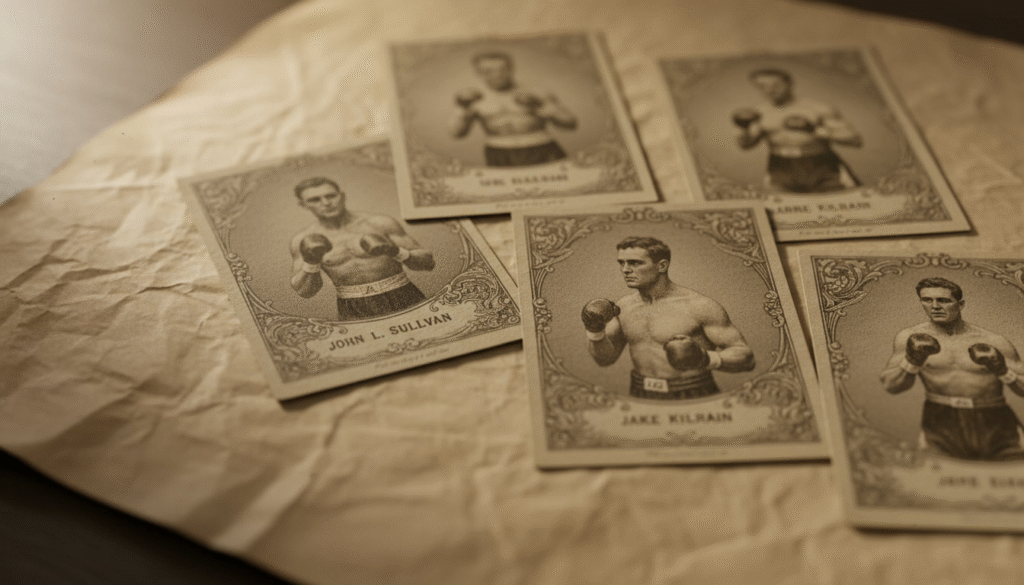
Boxing cards trace their roots to the tobacco era, when companies began inserting picture cards into cigarette packs to stiffen packaging and promote brand loyalty.
Among the earliest examples are the N174 Old Judge (1887) and N310 Mayo Cut Plug (1895) sets, featuring bare-knuckle legends such as John L. Sullivan, Jake Kilrain, and Bob Fitzsimmons.
Printed using sepia or lithographic processes, these cards are some of the oldest surviving visual records of boxing’s pioneers.
1900s–1910s – The Tobacco Golden Age
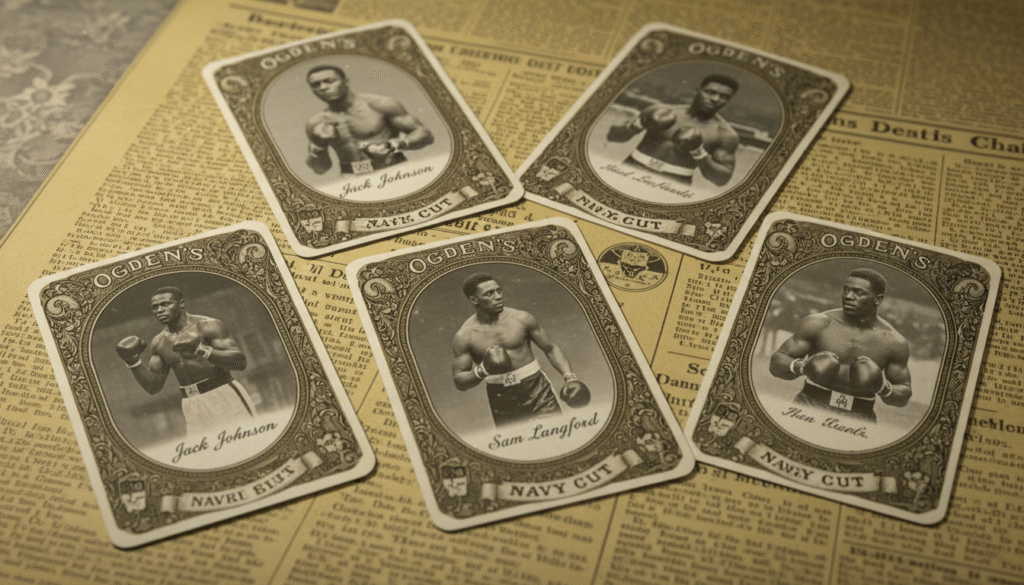
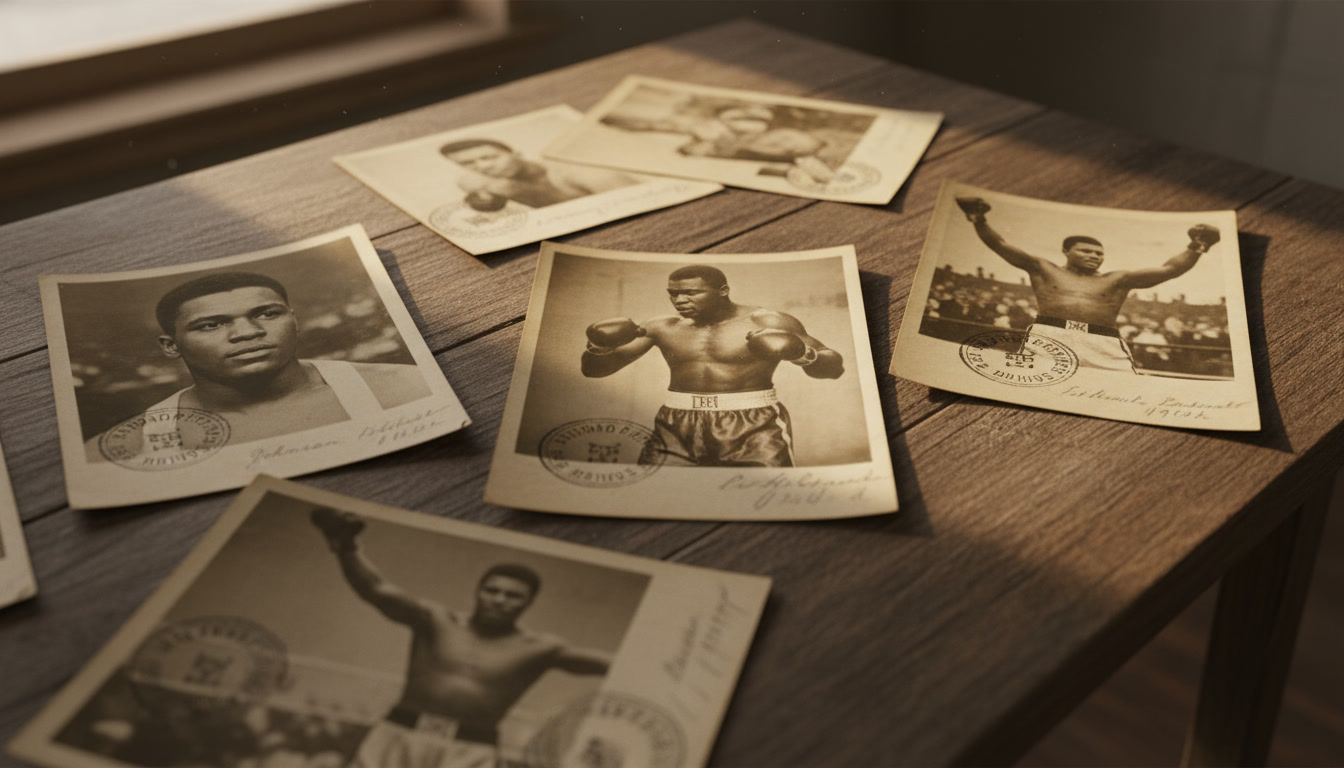
The early 20th century saw boxing’s rise as a mainstream sport. British manufacturers such as Ogden’s, Player’s, and Churchman’s issued elegant black-and-white portrait cards of champions like Jack Johnson, Sam Langford, and Tommy Burns.
In America, the T218 Champions (1910) and T220/T225 series combined boxing with other sports under “Champion Athletes” themes. These colorful lithographs, often backed with “Mecca” or “Hassan” cigarette branding, remain hallmarks of pre-war collecting.
1920s–1930s – Gum and Chocolate Era
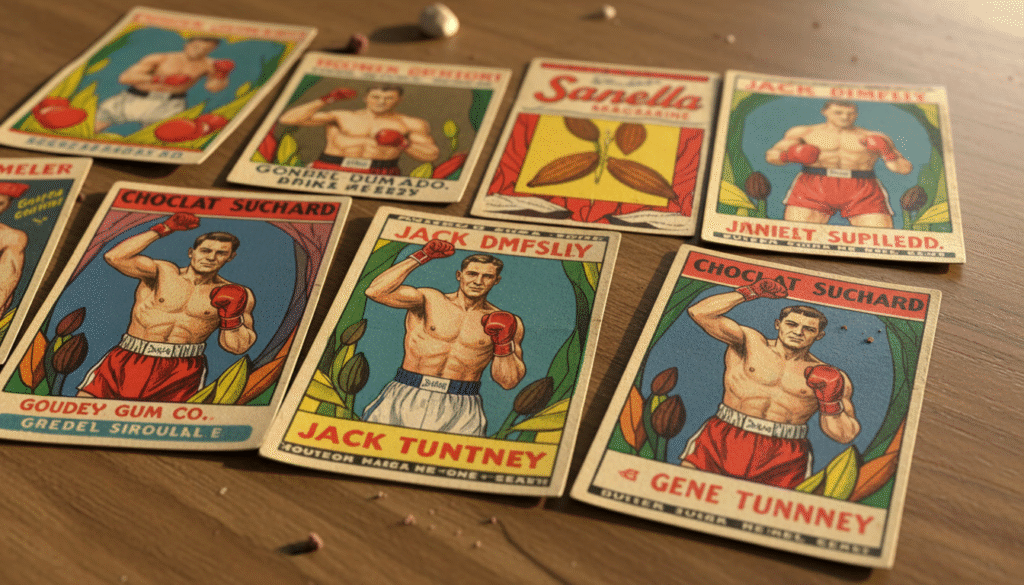
As tobacco promotions declined, confectionery companies filled the gap.
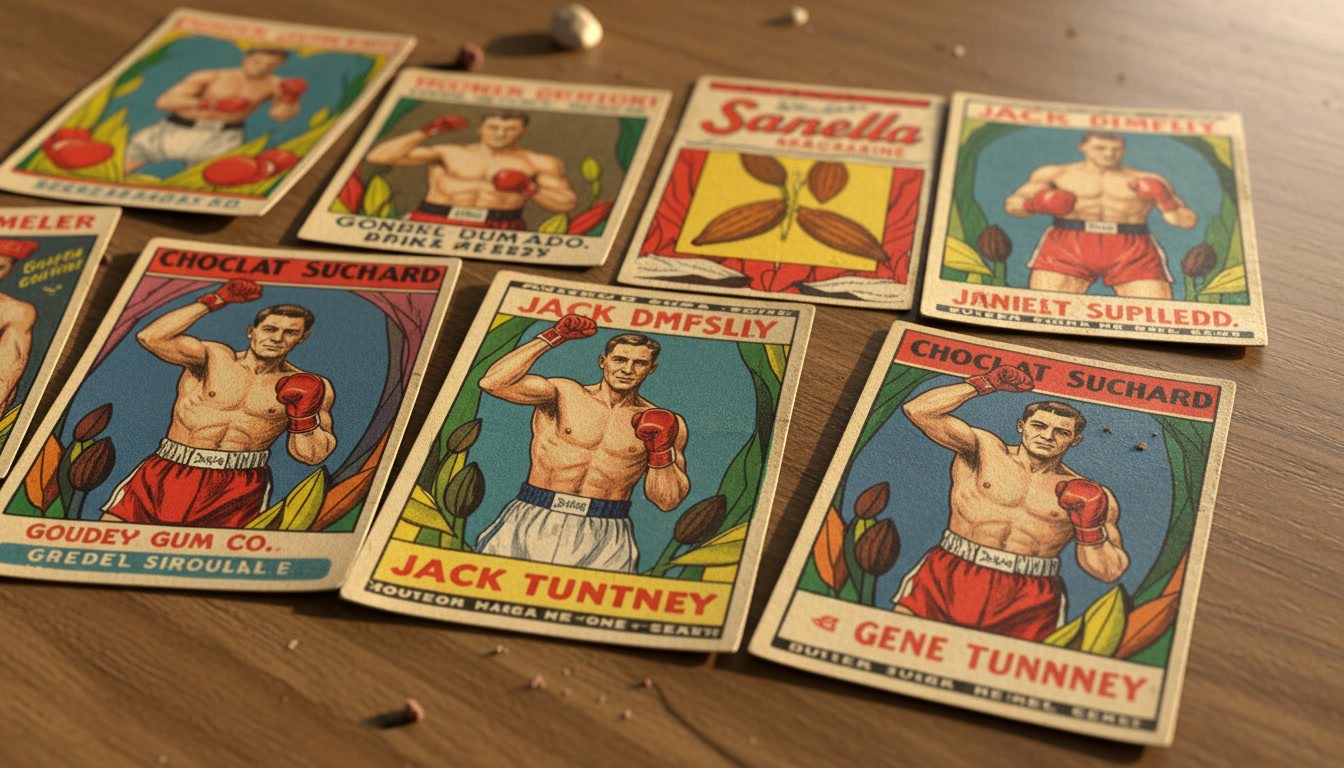
Sets like R318 Goudey Sport Kings (1933) placed boxers such as Jack Dempsey and Gene Tunney alongside baseball and track stars.
In Europe, German and Italian manufacturers like Sanella, Chocolat Suchard, and Echte Wagner produced vivid photo-based issues, often distributed in food packaging and redeemable for albums.
1940s–1950s – Post-War Photography

Post-war photography changed everything. The Leaf (1948–49) and Topps Ringside (1951) sets introduced realistic color portraits and action shots, replacing painted artwork.
Rocky Graziano, Sugar Ray Robinson, and Joe Louis became cardboard icons.
These years also saw regional issues such as British Barratt & Co. and international gum cards spreading boxing’s imagery to a new generation of fans.
1960s–1970s – Modern Champions & International Reach

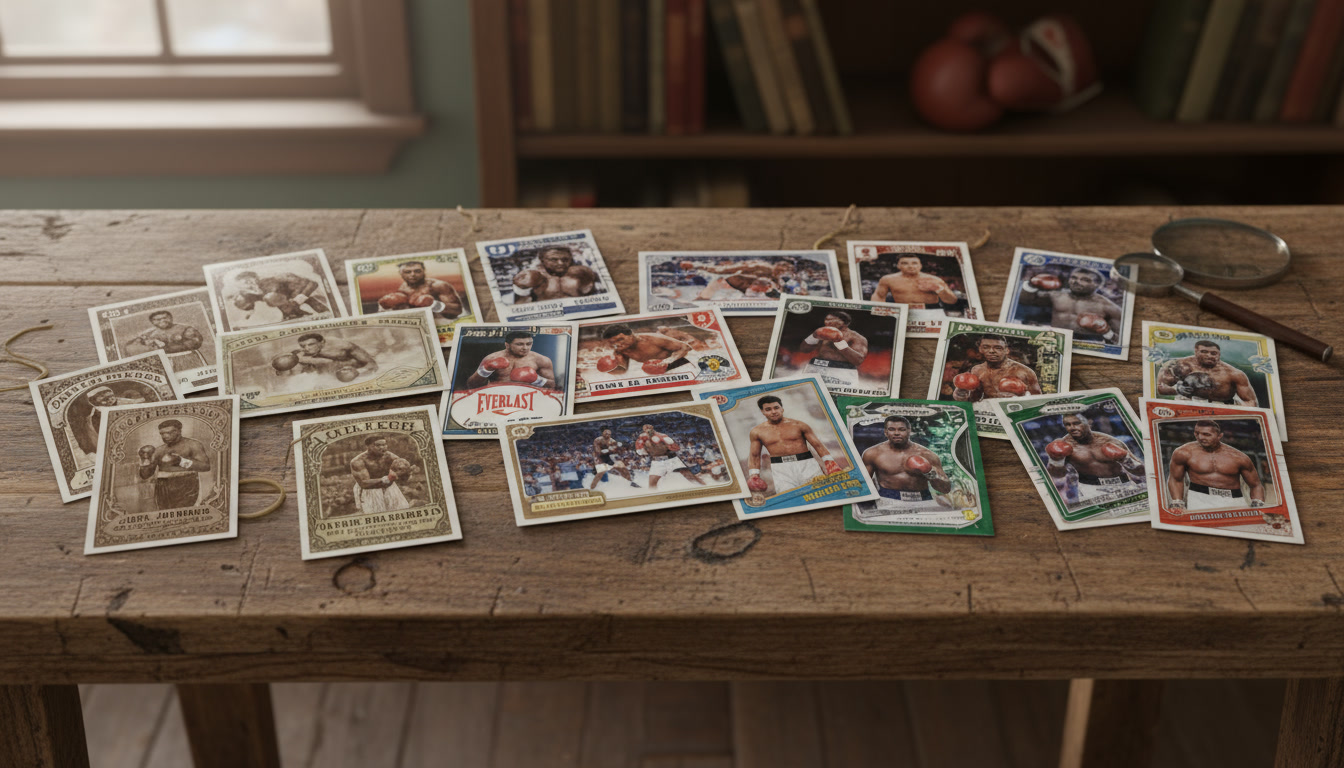
As television made boxers household names, cards chronicled stars like Muhammad Ali, Joe Frazier, and George Foreman.
European sticker makers Panini and FKS began producing collectible albums that reached millions of kids worldwide.
In the U.S., trading card companies experimented with glossy finishes and photo licensing, while promotional postcards and magazine inserts blurred the line between memorabilia and cards.
1980s–1990s – The Collector Boom

The sports-card explosion of the late 1980s brought boxing back into hobby shops.
Companies such as Kayo, AW Sports, and Ringlords issued full sets spotlighting modern fighters like Mike Tyson, Evander Holyfield, and Lennox Lewis.
While print runs were large—leading to today’s “junk-wax” era—they captured boxing’s transition into pay-per-view stardom. Parallel and autographed cards also appeared, setting the stage for the premium era.
2000s–Present – Premium and Globalization
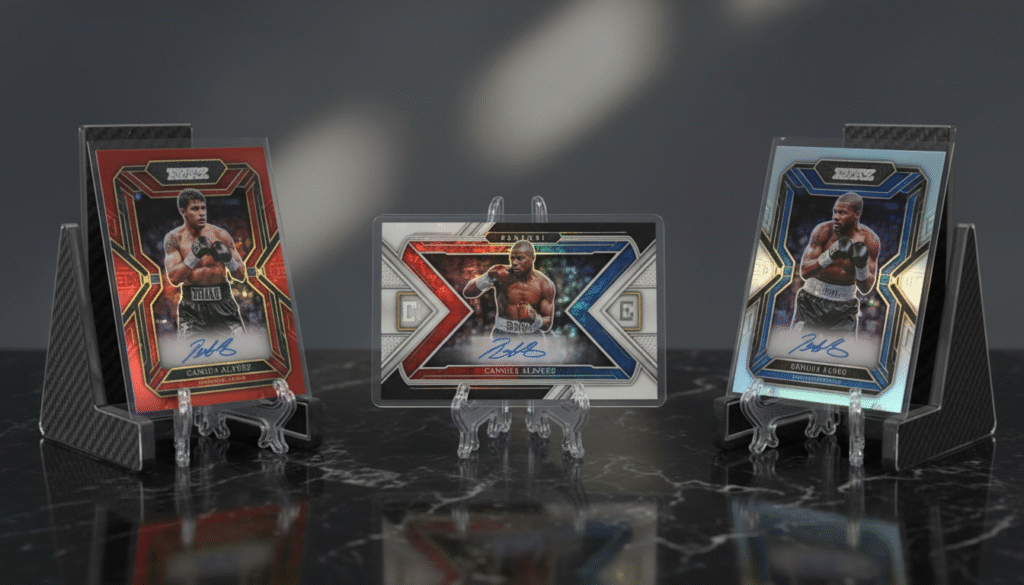
In the 21st century, brands like Topps, Panini, and Leaf merged digital production with luxury design.
High-end lines feature autographs, fight-worn relics, and limited serial numbering.
Modern icons — Manny Pacquiao, Canelo Álvarez, Floyd Mayweather Jr., and Gervonta Davis — headline global releases that connect collectors from Tokyo to New York.
Meanwhile, vintage tobacco and gum issues have gained museum-level respect, often fetching record auction prices.
From Ephemera to Art

What began as marketing filler has evolved into historical documentation and fine art.
Boxing cards now serve as tangible links to the sport’s cultural impact — each card capturing an era’s printing technology, social attitudes, and athletic heroes.
“To hold a 1910 Jack Johnson or a 1951 Ringside Sugar Ray is to hold a fragment of sports history — paper, ink, and legend.”
In Summary
| Era | Key Manufacturers | Notable Boxers | Defining Traits |
|---|---|---|---|
| 1880s–1890s | Goodwin & Co., Mayo | Sullivan, Fitzsimmons | First tobacco issues |
| 1900s–1910s | Ogden’s, T218 Mecca | Johnson, Langford | Lithographic portraits |
| 1920s–1930s | Goudey, Sanella | Dempsey, Tunney | Gum & chocolate cards |
| 1940s–1950s | Leaf, Topps | Robinson, Louis | Photo realism |
| 1960s–1970s | Panini, FKS | Ali, Frazier, Foreman | Stickers & global reach |
| 1980s–1990s | Kayo, AW Sports | Tyson, Holyfield | Mass production boom |
| 2000s–Present | Panini, Leaf, Topps | Pacquiao, Canelo | Premium & digital age |
Attribution
© Boxing Card Registry. All trademarks and card images belong to their respective owners. Content provided for educational and archival purposes only.