An essential guide for collectors, historians, and archivists
What Is a Type 1 Photo?
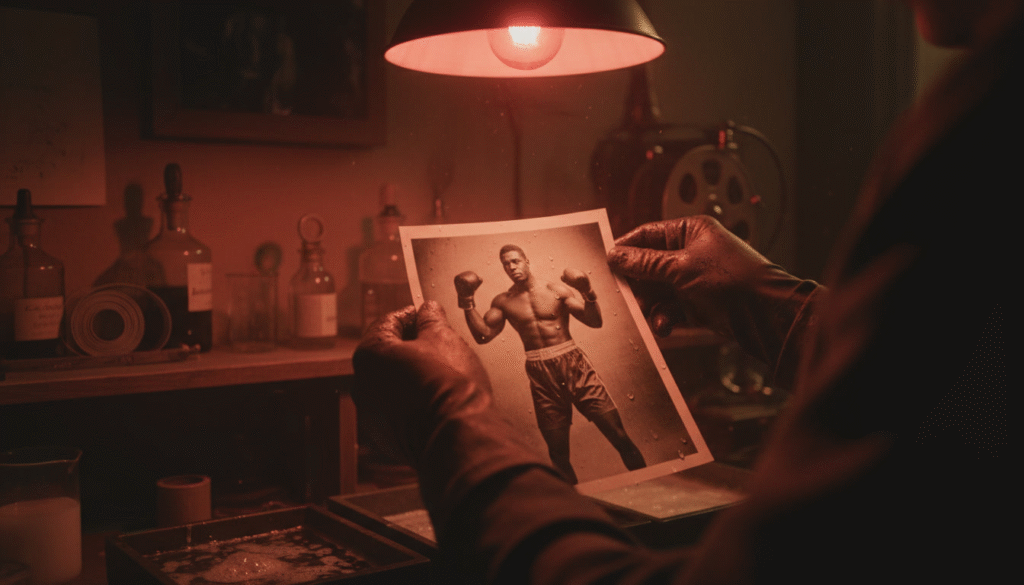
A Type 1 photo is a first-generation, original photograph developed directly from the original negative within approximately two years of when the image was taken. These are the earliest and most authentic prints — made either by the photographer, news agency, or publication at the time of the event.
For boxing collectors, Type 1 photos are the photographic equivalent of a rookie card — the first physical manifestation of a historic moment, often capturing legends like Jack Johnson, Joe Louis, or Muhammad Ali during their prime.
Why Type 1 Matters
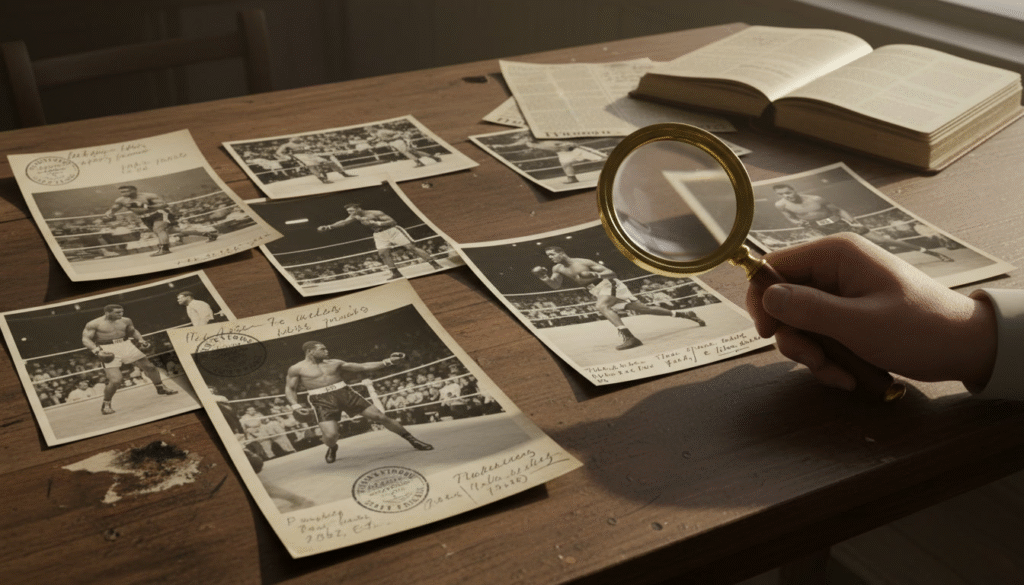
- Historical authenticity — direct link to the original negative.
- Investment value — scarcity and documented provenance make them highly collectible.
- Visual quality — early prints typically exhibit richer tones, sharper contrast, and unretouched details.
- Cultural significance — these are the prints that newspapers and magazines used to shape boxing history.
Later prints (Types 2–4) may come from the same negative, but they’re produced later or for secondary purposes.
The Four PSA Photo Types (Quick Reference)
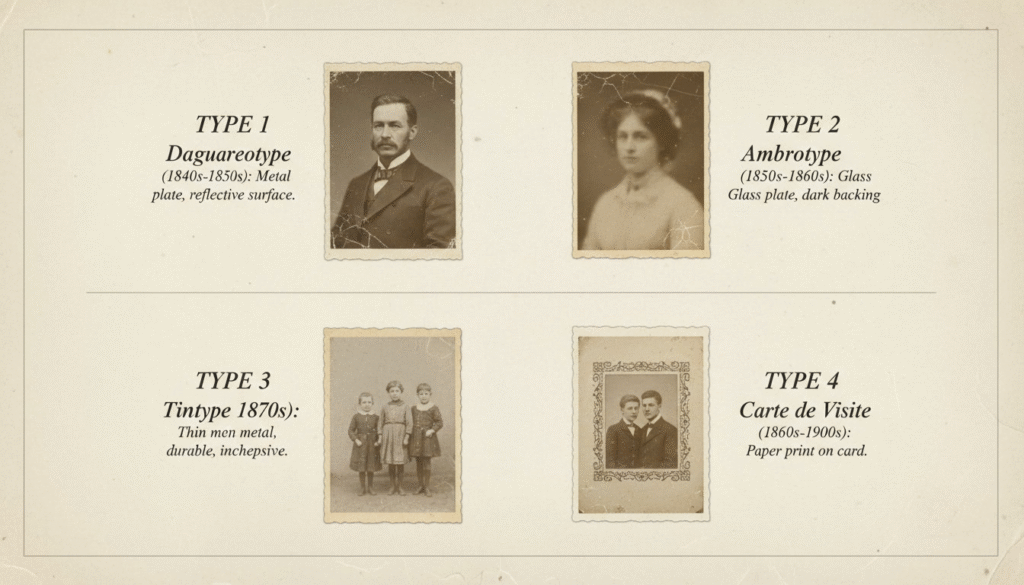
| Type | Description | Timeframe | Example Use |
|---|---|---|---|
| Type 1 | Original photo developed from the original negative within ~2 years of the shot. | c. 1910 photo printed 1910–1912 | Press photo or studio print |
| Type 2 | Photo made from the original negative but printed more than 2 years later. | c. 1910 photo printed in 1930s | Anniversary reprint |
| Type 3 | Photo made from a duplicate negative within 2 years of the image. | Copy made when original neg was unavailable | Press duplication |
| Type 4 | Photo made from a duplicate negative after 2 years. | Later reprints or retrospective issues | Museum or fan club issue |
How to Identify a True Type 1 Photo
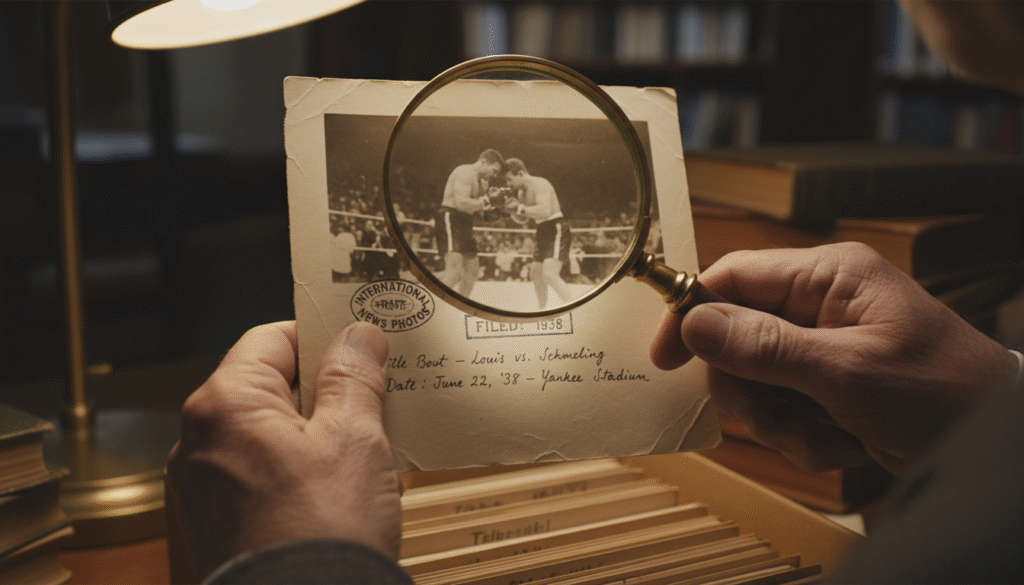
- Examine the Back
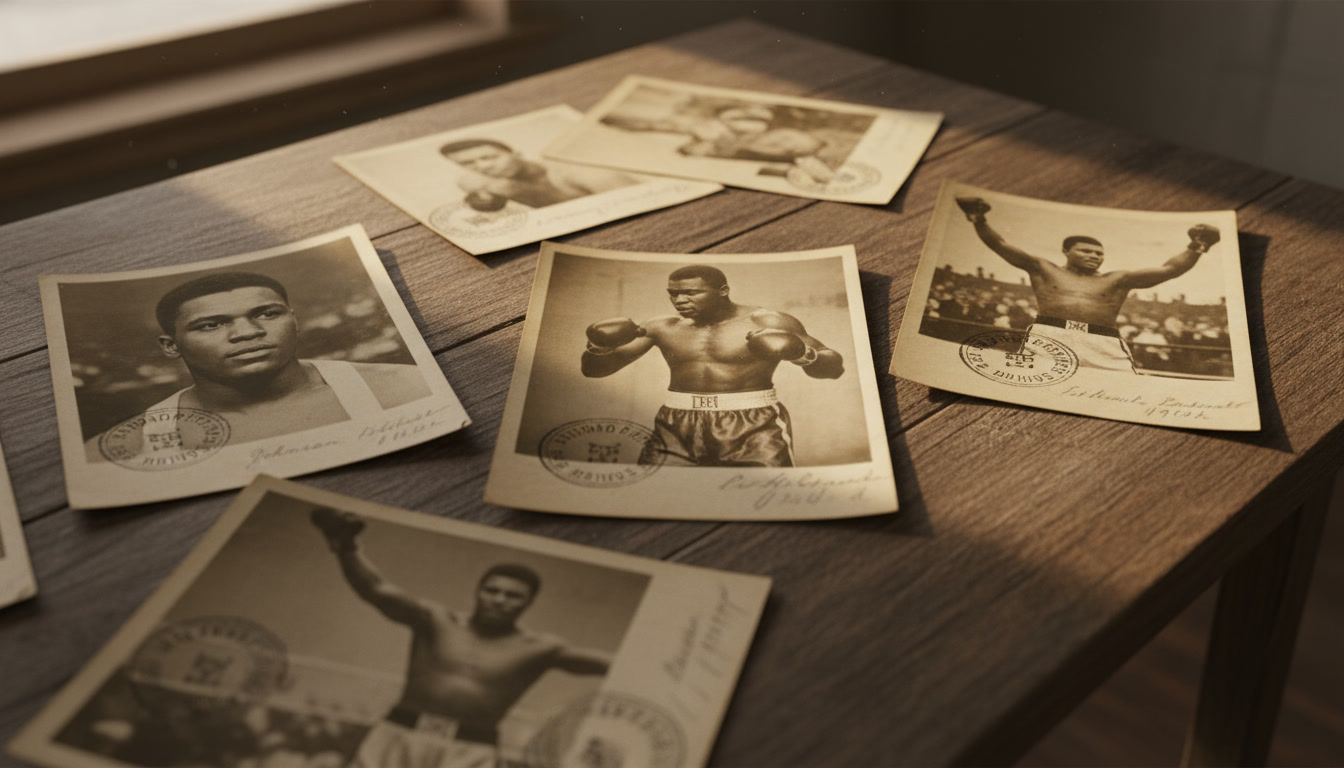
- Original press stamps: Look for vintage agency marks such as ACME, Underwood & Underwood, Wide World Photos, Keystone, or International News Photos.
- Date stamps: Type 1s often carry a contemporary date — typically within 24 months of the event.
- Editorial notes: Handwritten grease-pencil or typed captions attached by newspapers add authenticity.
- Evaluate the Paper & Texture
- Early photographic paper feels thick, fiber-based, and sometimes slightly glossy.
- Under light, it should show a faint silvering or sheen from silver gelatin processes — not the bright white of modern RC paper.
- Older prints may have slight sepia toning or oxidation near edges.
- Check for Developer Aging
- Look for natural wear consistent with age: slight corner rounding, faint toning, and authentic handling marks — not fresh, flat reprints.
- UV or blacklight inspection can reveal later chemical papers inconsistent with early 20th-century emulsions.
- Inspect the Image Quality
- Type 1s display exceptional detail and clarity, especially in fine areas like gloves, trunks, or ropes.
- Later reprints (Type 2–4) often look softer, with less tonal depth or detail loss from duplicate negatives.
- Cross-Reference Provenance
- Match backstamps and captions with known event dates (e.g., “Ali vs. Frazier I, March 8, 1971”).
- Compare known authentic examples via PSA, RMY Auctions, or Getty archives.
- Any matching publication appearance (e.g., Sports Illustrated, The Ring) can verify timing and context.
Common Pitfalls
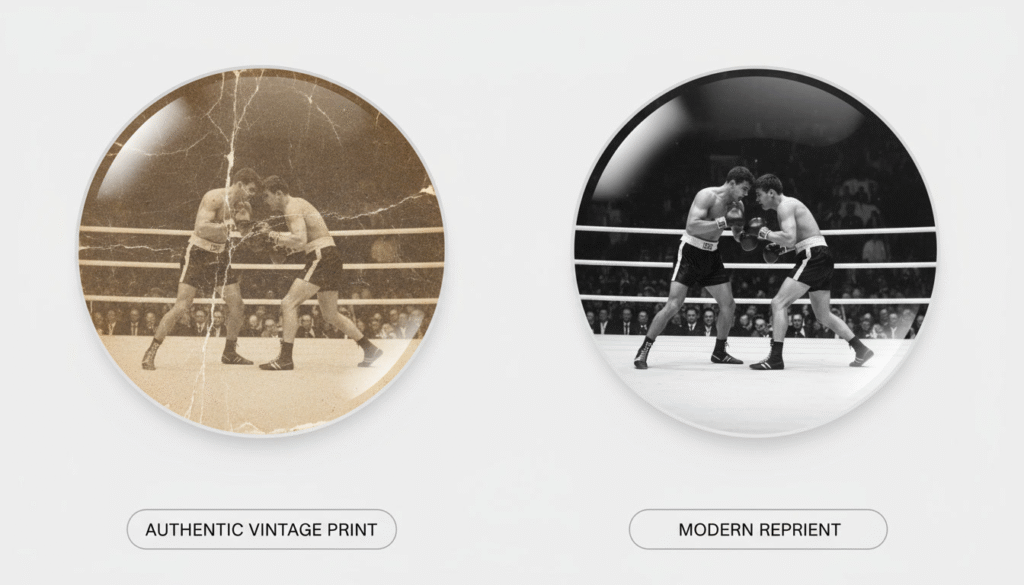
- Modern reprints: Often inkjet or laser reproductions on modern photo paper — smooth, bright, and lacking fiber texture.
- Copy negatives: Duped images tend to lose edge sharpness or contrast.
- Stamped fakes: Forgers sometimes add fabricated “press” stamps — check font style, ink aging, and alignment carefully.
- Trimmed edges: Some authentic press photos were trimmed by editors — acceptable if period-correct, but document it.
Bonus Tip — PSA & RMY Authentication

Organizations like PSA/DNA and RMY Auctions specialize in dating and authenticating Type 1 photos using paper stock, printing processes, and agency mark databases.
If you plan to sell or insure a piece, third-party certification dramatically strengthens its provenance and value.